
Studies show that well-designed displays can increase sales, providing a competitive edge for retailers. Effective visual merchandising enhances consumer appeal, emphasising the importance of planning, product placement, and curation to boost retail success.
Today, visual merchandising plays a vital role in attracting customers, improving their shopping experience, and ultimately increasing sales. In the UK retail sector, effective visual presentation can be the difference between a customer walking in or walking past.
This blog explains the concept of visual merchandising in detail, discusses its types and explores how it is evolving in the digital environment.
What is Visual Merchandising?
Visual merchandising is the practice of organising and displaying products within retail spaces to attract customers, create a comfortable shopping environment, enhance product features, and boost sales.
It includes window displays, wall displays, lighting, colour schemes, mannequins, and even music and scent. However, window displays and mannequins are not the only examples of visual merchandising. To stir customers’ interest, a retail establishment can also use interactive displays or wall decor.
Larger companies often collaborate between merchandisers and retail marketing to align displays with brand identity, while independent retailers have the freedom to create displays without brand restrictions.
The purpose of visual merchandising goes beyond aesthetic appeal; it aims to increase revenue. Although traditionally associated with in-store displays, effective visual merchandising must now also encompass online channels due to the rise of omnichannel retail.
What Exactly Does a Visual Merchandiser Do?
A visual merchandiser is a creative retail professional who is responsible for designing and installing the visual identity of the retail environment. Their creativity transforms the retail space into an experience that aligns with the brand’s identity.
Moreover, they manage every detail, from lighting selection and product display to store layouts.
What are the Roles and Responsibilities of a Visual Merchandiser
Some of the core responsibilities of a visual merchandiser are:
- Optimising store layouts to guide customers and using hot spots for high-profit items.
- Designing and installing store window displays, mannequins, and interior displays.
- Implementing brand-specific guidelines to ensure consistent branding across all UK store locations.
- Styling mannequins and product arrangement on the shelves, tables or walls.
- Ensuring all displays are neat, correctly priced and fully stocked.
Advantages
Visual merchandising is advantageous in many ways. Some of the common advantages include:
- It attracts and increases customers to your stores
- Effective visual merchandising can drive more sales and profit
- It provides a positive shopping experience for your customers
- This technique maximises the potential of your retail space
- You get the most value out of every product you sell
Disadvantages
Along with the above-mentioned advantages, there are a few disadvantages or hurdles of visual merchandising that you need to be aware of. These include:
- It might cost you more at the start to install, fix and improve everything
- The change of space and layout can be difficult and time-consuming
- You need to do more work due to more customers, sales and deliveries
What are the Key Elements of Effective Visual Merchandising
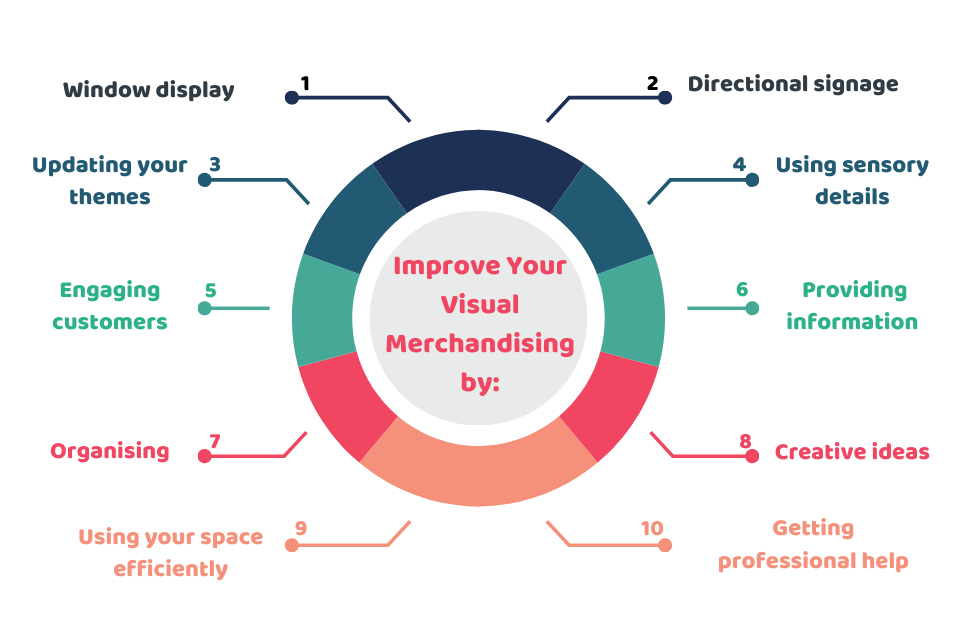
Effective retail visual merchandising uses a range of physical components to reflect a brand’s aesthetic, such as:
Lighting
Lighting can draw attention and help to enhance product visibility. In lifestyle and fashion stores, warm lights are used, while bright lights are preferred in pharmacies and supermarkets.
Colour
Different colours reflect different moods and tones. They play a big role in influencing customer behaviour. Clear signage also helps UK shoppers quickly find what they need, and improves satisfaction and efficiency.
Product Placement
Product placement is another vital component of visual merchandising. Placing products logically, such as by category, use or theme, encourages cross-selling and upselling.
Store Layout
Last but not least, store layout is another important aspect that guides customers naturally through the store. Your store layout shouldn’t confuse customers.
Window Displays
One of the key elements of in-store visual merchandising is window displays. Window displays are especially important in UK retail due to high pedestrian traffic in cities. Storytelling visuals and seasonal themes can draw consumers’ attention.
Why Visual Merchandising is Important in the UK
Visual merchandising is important as it acts as a silent salesperson of the brand. It directly influences purchasing decisions by turning bystanders into customers through attractive, organised product displays.
Enhance Customer Experience
Consumers in the UK value experience over simple transactions. Clear navigation, engaging product displays, and thoughtful store layouts make shopping more enjoyable.
Support Brand Identity
Whether it’s a modern startup or a heritage brand, visual merchandising helps communicate the brand story and values. Consistency across stores strengthens trust and recognition.
Boost Sales and Revenue
Strategic product placement can trigger impulse buying. For example, the positioning of a high-margin item at eye level can significantly influence purchasing decisions. Most customers are more likely to purchase prominently displayed items.
Maximise Retail Space
A thoughtful store layout steers foot traffic to prevent dead zones. This is to ensure that customers are exposed to as much of the high-margin inventory as possible.
What are the Benefits of Visual Merchandising
Some of the advantages of visual merchandising are:
- It reduces markdowns by offering better visibility of slow-moving stock.
- It uses floor layouts effectively and eliminates dead zones. This ensures every square foot of the retail space is used and contributes to making money.
- It enhances a positive in-store experience for customers and helps you increase sales over time.
Does Visual Merchandising Pay Well?
You may be wondering, what is visual merchandising salary?
Well, the salary of a visual merchandiser depends on expertise and experience. If you are a junior visual merchandiser, you may not get paid enough. However, if you are a senior with years of experience, you may earn a higher salary.
In the UK, the entry-level salaries start with almost £18k and can go up to £22k per year. On the other hand, the experienced staff can earn from £23k to £30k. (Note: these figures can change depending on market trends, experience and other factors).
What are the 4 P’s Of Visual Merchandising?
The 4 P’s of visual merchandising are Placement, Pricing, Promotion, and Product.
Placement
As the name suggests, placement is how the product is physically arranged in the store. This includes deciding shelf heights, floor layouts, and guiding foot traffic. Popular and high-margin items are strategically put at eye level to maximise the chances of a customer picking them up.
Product
It is the core item you are selling. A visual merchandiser needs to understand the product’s story, its key features, and who it appeals to. This dictates how it is handled on the floor, meaning whether it needs to be hung on a rail or folded on a table.
Pricing
Pricing is how the item’s cost is visually communicated. In visual merchandising, it is important to decide the appearance of the prices. This includes using small and minimalist price tags to imply high value or large bold red clearance signs to trigger urgency.
Promotion
Visual communication is included in the promotion, where promotional displays draw attention to offers. Promotion involves window displays, retail display bins, and large graphics.
The displays and visuals tell the customer about a sale, a new brand collection, or a seasonal event.
What are the Trends In Visual Merchandising in the UK
In the UK, visual merchandising is evolving due to sustainability demands and changing shopper expectations. Some key trends are:
Digital Integration
Interactive displays, screens, and QR codes are becoming common, blending digital and physical shopping experiences.
Sustainability-Focused Displays
Consumers these days are becoming eco-conscious. Retailers are now using minimalistic designs, recycled materials, and sustainable messaging in their displays.
Experiential Retail
Stores are evolving into experience hubs. They offer immersive environments rather than just shelves of products.
Localisation
Retailers in the UK tailor displays to reflect local events, culture, or community identity, making stores feel more relevant to their audience.
What are the Most Common Challenges in Visual Merchandising
Visual merchandising faces a unique set of challenges. You may think visual merchandising is only about creating attractive displays, but commercial effectiveness is far more important.
Keeping up with the Trends
Keeping up with fast-changing trends, especially in the beauty, lifestyle, and fashion sectors. Merchandising strategies need to change; otherwise, they can look outdated. Retailers need to stay responsive.
Sustainability Pressure
UK consumers now expect environmentally responsible retail practices. This means excessive packaging, single-use display materials and wasteful seasonal installation should be reduced in visual merchandising.
Consistency Across All Stores
Usually, national chains struggle to ensure consistency in visual standards across their branches. It is important to maintain consistency across all store locations to ensure customers have the same recognisable experience.
Limited Store Space
In urban cities like London, many street stores operate in compact spaces. A visual merchandiser needs to maximise impact without obstructing customer flow.
Rising Operational Costs
Retailers in the UK are experiencing increasing rents, labour costs and energy prices. Visual merchandising budgets are often restricted, making it difficult to invest in innovative displays.
Competition From Online Retail
Customers’ expectations have now changed due to e-commerce. Physical stores are now adopting both in-store and online visual strategies because if a physical store feels no more exciting than a website, customers may return to online shopping.
The Bottom Line
You might be thinking visual merchandising is all about making a store look attractive, but it’s not. It is a strategic tool that influences customers’ behaviour, drives business performance, and strengthens brand identity.
Competition is high in the UK retail landscape, making visual merchandising an essential tool because it can deliver significant returns and meet customers’ expectations. By combining creativity and staying aligned with emerging trends, you can create engaging shopping experiences. It not only attracts customers but also keeps them coming back.
With a visual merchandiser, you also need a professional accountant to boost your business. At AccountingFirms, you can find an expert to manage your business finances. Compare prices and features and find a professional suitable for your business with ease.
Disclaimer: The information provided on AccountingFirms.co.uk is for informational purposes only and should not be considered as financial advice. Always consult with a professional accountant to ensure compliance with UK laws and regulations.

 Join 5,000+ businesses comparing today