What is Sole Proprietorship? Things You Should Know

Table of Contents

Many aspiring entrepreneurs give up before even understanding what is sole proprietorship. This is because they believe the process of starting a business is cryptic and filled with bureaucratic obstacles. Therefore, you should know a straightforward and easily accessible route to starting your business.

If you want to maintain complete control over your business and prefer an easy-to-create and quick-to-establish structure, it will take minutes rather than months. Definitely, understanding what is sole proprietorship can give you a competitive edge in the marketplace.

Speak to an Expert

Get in touch with our skilled professionals for expert UK tax and accounting solutions specialised to minimise your tax burden and resolve your financial challenges efficiently.

What is Sole Proprietorship?

In simple words, a sole proprietorship refers to an individual’s ownership and of the operation of a business. In this structure, there is no legal distinction between the owner and the business itself. If you are a contractor, a freelance worker, a consultant, or a tradesperson, chances are you are already operating as a sole proprietor.

For this reason, it is important to understand what is sole proprietorship. Well, this term is also known as a sole trader. And, as the name shows, you solely receive all business profits, yet you also bear all the risks associated with operating your business. This is the most common form of business throughout the UK due to its simple nature and ease of setup.

Get in touch with our young, clever, and tech-driven professionals if you want to choose the solution to tax burden or accounting problems in the UK for your income. We will ensure to offer the best services.

What are the Characteristics of a Sole Proprietorship?


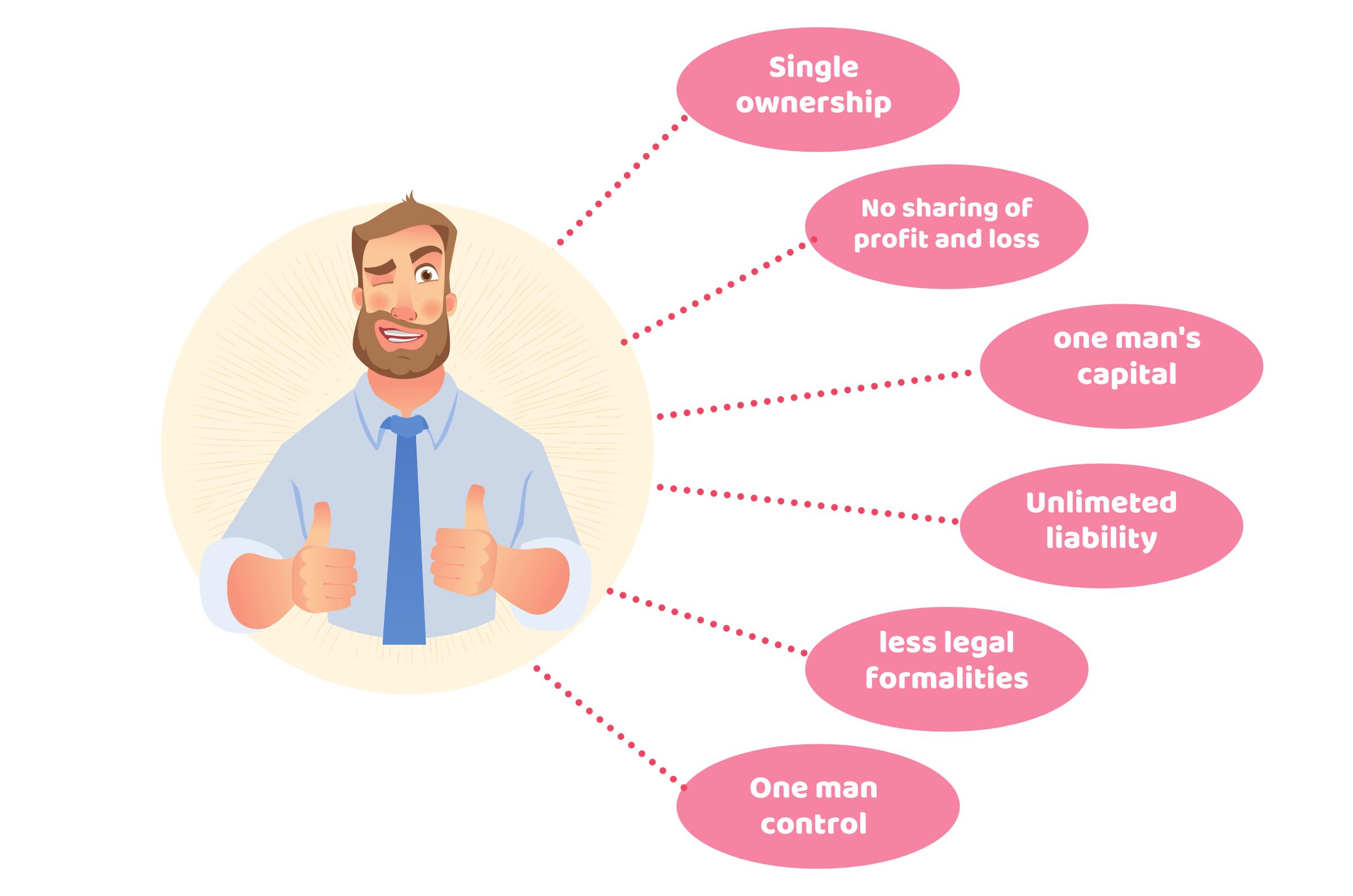
What Is Sole Proprietorship

Sole Ownership:

Here, the person has sole ownership of his business. All the assets are the personal property of the sole proprietor. He is the key decision-maker for his business. He has the authority to dissolve the business, or the business might end at his demise.

No Profit and Loss Sharing:

If a business is booming with a lot of profit, only the owner will enjoy it. Similarly, if there is any loss, he’s the sole bearer of that loss.

Singlehanded Capital:

The sole proprietor brings the capital to the business on his own without the help of any other person. He can generate capital by personal assets or by borrowing from relatives, friends, banks, financial institutions, etc.

One Man Control:

Unlike other business types, sole proprietors have full-fledged control of the business. The owner can do whatever he wants for the business as per his personal choice.

Fewer Legal Requirements:

This business contains fewer legal requirements. It doesn’t have any registration fees to open and close the business. 

Unlimited Liability:

It is one of the disadvantages of a sole proprietorship that the liability is unlimited. Your personal and business assets are considered the same. Thus, at the time of need or emergency, your personal assets can be used to pay the liabilities of the business. 

Sole Proprietorship in the UK

If you are considering becoming a sole proprietor in the UK, you may be wondering, “What is sole proprietorship in the UK, right?” According to HMRC, a sole proprietor is a person who runs their own business as a self-employed individual. 

In the UK, sole traders must inform HMRC of any self-employment income earned above £1,000 during the tax year. You must keep accurate records of your sales and costs, file a Self Assessment Tax Return each year, pay Income Tax, and pay Class 2 and Class 4 National Insurance contributions.

How to Set Up a Sole Proprietorship?

Once you understand what is sole proprietorship, setting one up is relatively easy. 

  • Select a Name: You can use your own name or set up a business name.
  • Register with HMRC: In the UK, you will need to register for Self Assessment.
  • Set Up a Bank Account: Although it is not a legal requirement for sole traders, you should have a separate account for your business and personal finances.
  • Local Laws: Depending on what type of business you are starting (e.g. catering or street trading), you may require certain licenses to operate legally.

What are the Advantages of a Sole Proprietorship?

Sole proprietorships have many advantages, making them a popular choice for new business owners. Some of the largest advantages of operating as a sole proprietor include:

1- Speed of Operation

The primary advantage of being a sole proprietor is the speed at which you can make changes to your business. Furthermore, you do not have to hold board meetings or conduct any formal voting, as you can make your own decisions. 

You can change your business model almost instantly if you see a market opportunity. This type of flexibility is one of the key reasons why smaller businesses can often out-produce larger, slower corporations.

2- Tax Benefits

The tax advantages of being a sole proprietor are also significant. Most jurisdictions in the United Kingdom allow you to have the “Personal Allowance”. The amount of money that you can make without paying taxes. Additionally, the administrative costs of filing your taxes as a sole trader are significantly less than what you would pay to have an auditor for a limited company.

Need Help or Have a Query? Get in touch with our professionals at AccountingFirms. Connect with the Best Accounting and Tax Experts near you in just 3 minutes – Register now for Free!

What are the Disadvantages of Sole Proprietorship?

Sole proprietorships can be a great way to start a business. However, potential entrepreneurs need to consider some disadvantages of the sole proprietorship structure before starting. 

  • The most significant disadvantage is the absence of a corporate veil. The sole proprietorship is not considered a separate legal entity from the owner. 
  • The owner’s personal assets, including their house, car and personal savings, are at risk if the business fails.
  • Sole proprietors face absolute liability risks. This means if they are sued or default on payment obligations, they may lose their personal assets to settle those debts.  As a result, many sole proprietors purchase professional indemnity insurance to help protect against these risks.
  • In addition to liability issues, sole proprietors face limitations on their ability to grow the business. Because a sole proprietorship is an individual and not a corporation, the owner cannot sell shares of the company to raise capital. 
  • Banks will typically be reluctant to lend money to individuals running sole proprietorships, compared to established limited liability companies.

Keeping Records and Compliance with HMRC

HMRC require you to keep your records for a minimum of five years after the submission deadline of the relevant tax year (31 January). If you do not keep accurate and up-to-date records, you can be fined significant amounts.

You are required to keep track of:

  • Your total sales and income
  • Your total costs and expenses relating to your business (e.g. office costs, travel, etc.)
  • Your VAT records (if you are VAT registered)
  • All records related to PAYE (if you have any employees)

Tax Benefits of a Sole Proprietorship

Compared to other business types, the tax benefits associated with the sole proprietorship business model offer many advantages. A sole proprietor has much simpler tax reporting requirements, and profits from your business can be included in your personal income. 

Further, a sole proprietorship does not require that you file a separate return for corporate taxes. You can write off many expenses related to your business, such as travel, equipment, and location. If you are thinking about starting a business, you need to thoroughly understand all the tax benefits of being a sole proprietor.

Speak to an Expert

Get in touch with our skilled professionals for expert UK tax and accounting solutions specialised to minimise your tax burden and resolve your financial challenges efficiently.

The Bottom Line

Now that what is sole proprietorship is explained with all its risks and benefits, you can choose the best for your business. The sole proprietorship is the most common first step for small businesses, and for some businesses, it is also a long-term option. 

Disclaimer: The information provided on AccountingFirms.co.uk is for informational purposes only and should not be considered as financial advice. Always consult with a professional accountant to ensure compliance with UK laws and regulations.

Need a Hand With Your Finances

Our expert team is here to take the stress out of managing your money. Whether it’s taxes, bookkeeping, or general advice — we’ve got your back.

Find Qualified Accountants & Tax Experts.

Compare Services, Fee and Signup online in under 2 minutes with AccountingFirms. ALL FOR FREE!

Ask an Expert! Book a Demo Request A Callback

Self-Employed? Learn What You Can (Legally) Claim for Free!

Looking for a Qualified Accountant? Compare Accountants Now.

Accountants? Looking to Grow? List Your Firm Now?

Looking for a Qualified Accountant? Compare Accountants Now.

Accountants? Looking to Grow? List Your Firm Now?