
You may have come across the term “dormant company” when dealing with business registration or accounting in the UK. But what is dormant company?
A dormant company is a legally registered business in the UK that is not currently trading. UK business owners should understand the concept of a dormant company because even inactive businesses still have legal responsibilities.
This guide gives an in-depth explanation of a dormant company, how it works, and how to manage one in 2026.
What is Dormant Company?
In the UK, a dormant company is a business that is registered with Companies House but has no significant trading or financial transactions during a financial year.
In simple words, the company exists but is not doing business and is not active in earning income. It has no significant financial activity to report as well, but it needs to file annual documentation to remain a dormant company.
It’s important to note that “dormant” can have slightly different meanings for:
- Corporation Tax and Company Tax returns
- Annual accounts and returns for Companies House
What is Dormant Company For Corporation Tax?
HM Revenue and Customs (HMRC) considers a company to be inactive for Corporation Tax if it:
- Has stopped trading and has no earnings
- Is a new limited company that hasn’t started business
- Is a flat management company
What is Dormant Company for Companies House?
Companies House considers your company dormant if it has no significant transactions in the financial year.
Non-significant transactions include:
- Filing fees
- Penalties for late filing
- Money paid for shares upon incorporation
If you resume trading, you must inform HMRC and update your company status accordingly.
Can a Dormant Company Make Money?
No, a dormant company should not carry out trading activities or earn income. Trading includes selling, buying, hiring staff or earning interest (except in limited cases where minimal bank interest may still be considered non-significant).
According to HMRC, a company is dormant when there are no significant accounting transactions. It does not:
- Provide services
- Sell goods
- Hire staff
- Manage investments and receive payments
- Earn income
If a company carries out such accounting transactions, it will forfeit its dormant trading status. Then the company will be required to prepare full statutory accounts.
Now that we know what is dormant company, let’s understand why you would have a dormant company.
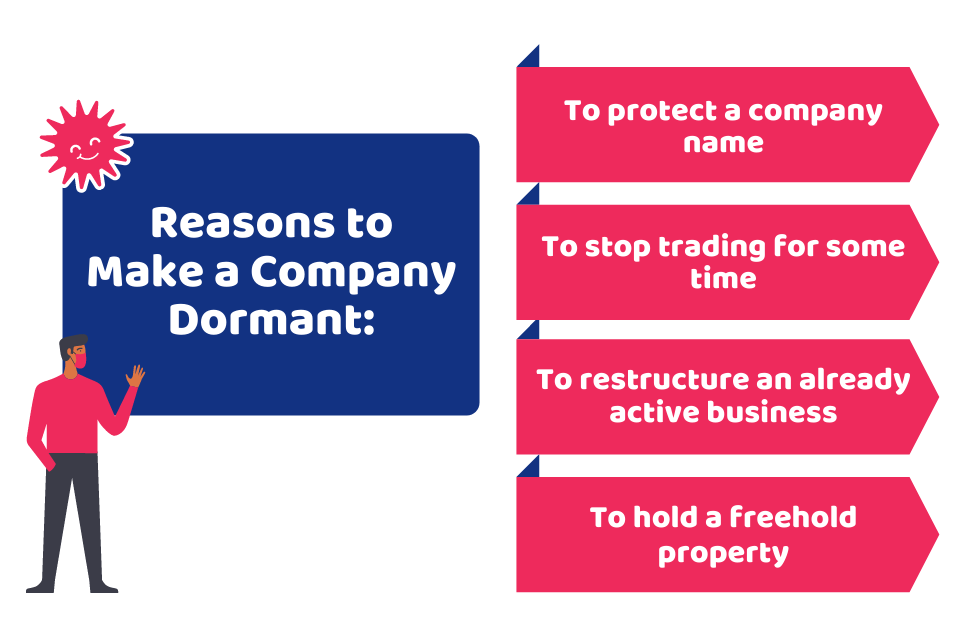
Why Would Someone Have a Dormant Company?
You can have a dormant company for multiple reasons. Even though you are trading, keeping your company registered with Companies House can be useful in different situations:
Preparing for Future Business
You might plan to start a business in the future, but want everything set up in advance. A dormant company allows you to do that without starting operations instantly.
Protecting a Business Name
You protect your business name by registering your company and keeping it dormant. No one else can use your business name.
Holding Assets
Some people keep companies dormant to hold assets like copyrights, trademarks, or property without actively trading.
Temporarily Pausing a Business
If your company isn’t currently in business due to personal reasons or market conditions, you can make it dormant instead of closing it.
Creating a Shelf Company
You can set up a shelf company and leave it dormant to sell it later. Most buyers prefer a registered company and ready to use.
How Long Can You Leave a Company Dormant?
A common follow-up question to what is dormant company, is how long you can keep it as dormant.
You can keep your company dormant indefinitely with no legal time limit. However, you must ensure that it has no significant transactions, and you are filing annual accounts and confirmation statements with Companies House.
If you can maintain compliance, then you can hold a company in a dormant state for years.
Can a Company Make or Receive Payments When Dormant?
No, a dormant company cannot make or receive payments. However, there are a few minor exceptions. For example, you can pay annual return fees to Companies House or bank charges. Any active income or expense will compromise the dormant status and
require full statutory accounts to be prepared and filed.
How Do I Make a Company Dormant?
If you are learning what is dormant company, you also need to understand how to make your company dormant. The process is easy, but you must follow the correct steps to stay compliant. Here are the steps you need to take:
- Stop all trading activity
- Ensure no significant transactions
- Inform HMRC
- Close business bank accounts
- Continue filing annual dormant accounts and confirmation statements with Companies House
What are the Benefits of Keeping a Company Dormant?
Some of the advantages of keeping a company dormant are:
- Keeping a dormant company ensures your business name stays yours, even if you are not doing business
- Dormant companies have simplified accounting requirements, making them easier and cheaper to maintain.
- You usually won’t need to pay Corporation Tax if HMRC confirms your company is dormant.
- You can restart your business whenever you are ready without setting up a new business.
- Instead of dissolving your company, you can keep it legally active without operating it.
What are the Disadvantages of Keeping a Company Dormant
Understanding what is dormant company comes with learning its downsides. Although a dormant company has several benefits, there are some drawbacks, such as:
- You must still file annual dormant accounts and confirmation statements
- You cannot trade, earn income, or pay expenses
- Even though your company is inactive, failing to meet legal obligations can lead to penalties
Can You Claim Expenses While Dormant?
A dormant company generally should not have expenses beyond minimal allowable costs (such as Companies House fees or bank charges), as most expenses may affect its dormant status. These are limited to significant accounting transactions that maintain the company’s status rather than active trading.
The Bottom Line
So, what is dormant company, and is it the right choice for your business? Understanding what a dormant company is helps you manage or plan a business in the UK. Although a dormant company is inactive in trading, it still has legal responsibilities and must comply with the UK regulations to avoid penalties.
If you are confused about whether your company qualifies as dormant or how to maintain compliance, it is always best to consult a professional accountant. At AccountingFirms, you can find the best accountants suitable for your business. We can help you stay compliant with HMRC and Companies House requirements through amazing accounting services available on one platform.
Disclaimer: The information provided on AccountingFirms.co.uk is for informational purposes only and should not be considered as financial advice. Always consult with a professional accountant to ensure compliance with UK laws and regulations.

 Join 5,000+ businesses comparing today